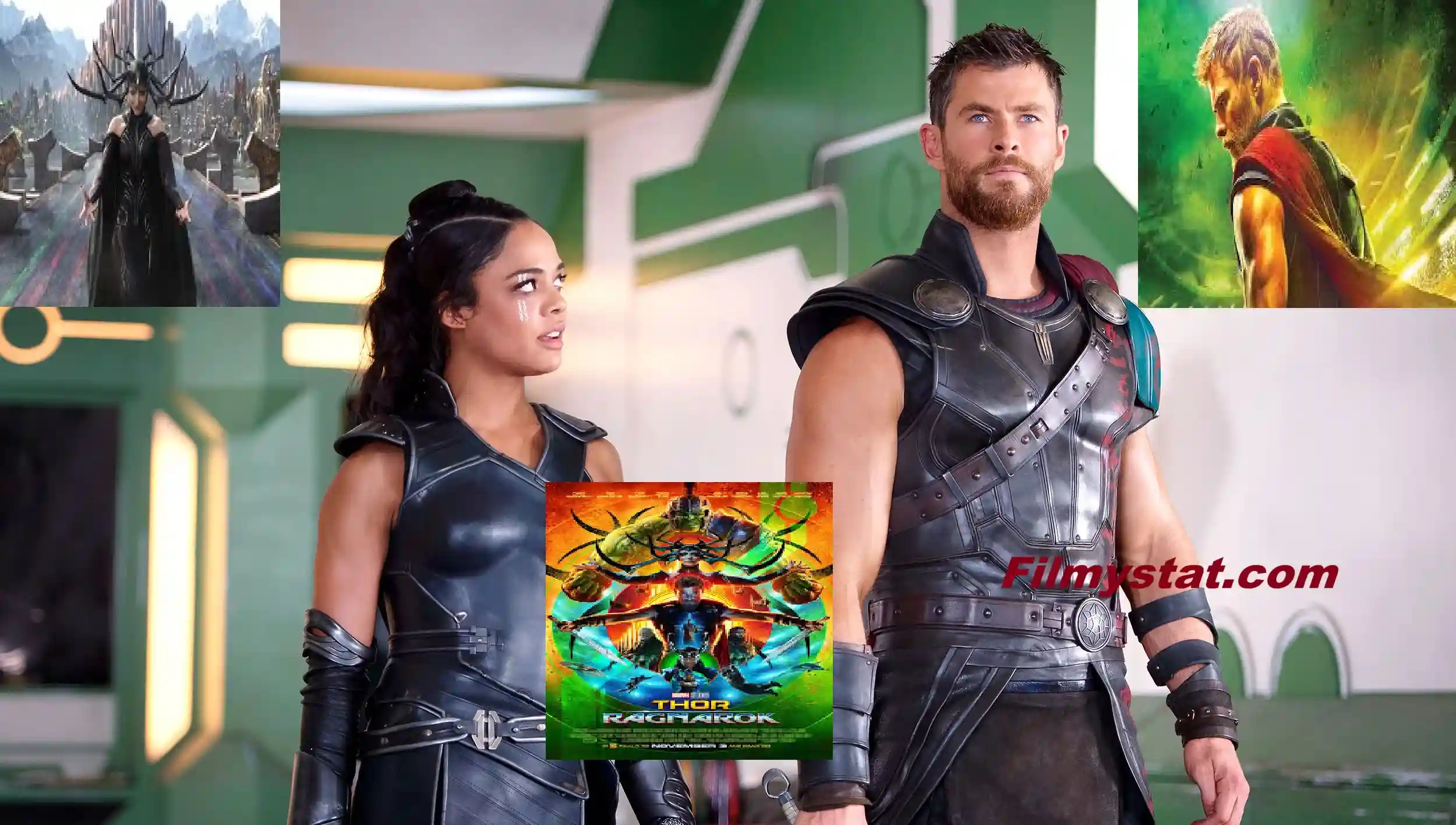
Thor: Ragnarok represents a major reinvention of Thor’s character within the Marvel Cinematic Universe (MCU). Released in 2017, the film abandons the traditional, mythological tone of earlier Thor movies and replaces it with a bold mix of humor, cosmic adventure, and character-driven storytelling.
Rather than focusing solely on Asgardian lore, Thor: Ragnarok explores themes of identity, loss, leadership, and transformation. It is not just a story about preventing destruction—it is about learning to move forward after everything familiar is gone.
This article follows a spoiler-free structure first, with a clearly separated spoiler section later.
Thor: Ragnarok
| Detail | Information |
|---|---|
| Release Year | 2017 |
| Genre | Superhero, Action, Adventure, Fantasy |
| Director | Taika Waititi |
| Studio | Marvel Studios |
| MCU Phase | Phase Three |
| Runtime | Approx. 130 minutes |
Overview:
Thor: Ragnarok marks a tonal and narrative shift for the Thor franchise, transforming the character from a traditional warrior-god into a more self-aware, emotionally grounded hero.
Story Overview
At the beginning of the film, Thor finds himself far from Asgard, facing threats that challenge both his strength and his understanding of destiny. As events unfold, he becomes separated from his home and forced into unfamiliar territory where survival depends more on adaptability than brute force.
Unlike earlier Thor films, the central conflict of Ragnarok is not just about stopping an enemy—it is about accepting inevitable change. The story pushes Thor into situations where his traditional identity no longer works, forcing him to grow beyond his reliance on weapons, titles, and inherited power.
The film balances high-stakes action with sharp humor, using comedy not as distraction but as a way to explore resilience in the face of loss.
Thor’s Character Evolution
One of the most important achievements of Thor: Ragnarok is the complete redefinition of Thor as a character.
Thor begins the film:
- Confident in his identity as the God of Thunder
- Emotionally dependent on Asgard and its symbols
- Reliant on external sources of power
Over the course of the story, Thor learns that leadership is not tied to a throne, a weapon, or a location. His growth is not about becoming stronger physically, but about becoming emotionally independent and self-aware.
This evolution sets the foundation for Thor’s role in later MCU films.
A New Tone for the Thor Franchise
Earlier Thor movies leaned heavily on Shakespearean drama and mythological seriousness. Ragnarok intentionally breaks away from this approach.
Director Taika Waititi introduces:
- Self-aware humor
- Improvisational dialogue
- A lighter, more colorful visual palette
However, beneath the humor lies a serious narrative about destruction, responsibility, and rebirth. The film proves that comedy and emotional depth are not mutually exclusive.
Supporting Characters and Their Impact
Loki
Loki’s relationship with Thor continues to evolve, shifting from rivalry toward reluctant cooperation. His character embodies chaos, survival, and moral ambiguity, serving as a contrast to Thor’s growing sense of responsibility.
Hulk
Hulk’s role in Ragnarok explores identity and autonomy. For the first time, the character is forced to confront the idea that he may not simply be a transformation, but an individual with agency and desires of his own.
Valkyrie
Valkyrie introduces a new perspective on heroism. Her character represents the emotional toll of failure and the difficulty of moving past trauma. She is neither idealized nor glorified, making her one of the film’s most grounded figures.
The Villain and the Theme of Destruction
Unlike many MCU antagonists, the central threat in Thor: Ragnarok is deeply tied to the history of Asgard itself. The villain represents consequences long ignored—past actions catching up with a civilization built on conquest.
This framing shifts the narrative away from simple good-versus-evil and toward historical accountability. The film asks whether a society can survive if it refuses to confront its own past.
Themes That Define Thor: Ragnarok
Identity Beyond Symbols
Thor learns that his power does not come from weapons, crowns, or inherited titles. True identity comes from choice and self-belief.
Loss and Acceptance
The film treats loss as unavoidable rather than tragic. Growth occurs not by preventing loss, but by accepting it and adapting.
Leadership Through Change
Leadership is shown not as control, but as the ability to guide others through transformation.
Humor as Survival
Comedy becomes a coping mechanism, allowing characters to endure extreme circumstances without emotional collapse.
Visual Style and World-Building
Thor: Ragnarok stands out visually within the MCU. Bright colors, retro-inspired designs, and imaginative environments give the film a distinct identity.
Rather than overwhelming the audience with realism, the visuals support the story’s surreal and transformative tone. Action sequences are designed to highlight character moments rather than pure destruction.
Importance of Thor: Ragnarok in the MCU Timeline
Thor: Ragnarok is one of the most important setup films in the MCU.
It:
- Redefines Thor’s personality and role
- Reshapes Asgard’s future
- Sets emotional groundwork for Infinity War
- Changes the dynamic between major characters
Without Ragnarok, Thor’s later development in the MCU would feel abrupt and incomplete.
Spoiler Section: Ending Explained
The conclusion of Thor: Ragnarok embraces inevitability rather than victory. Instead of preventing destruction at all costs, Thor makes a deliberate choice that prioritizes survival and renewal over preservation.
This decision represents Thor’s final step into maturity. He accepts that leadership sometimes requires letting go of the past to protect the future.
The ending reinforces the film’s core message:
A place is not defined by buildings or history, but by the people who carry its values forward.
Audience and Critical Reception
Upon release, Thor: Ragnarok received widespread praise for its fresh direction.
- Audiences appreciated the humor and emotional balance
- Critics praised the reinvention of Thor’s character
- Many viewed it as the strongest Thor film to date
Over time, it has become one of the most rewatched and influential MCU entries.
Frequently Asked Questions
Is Thor: Ragnarok essential for the MCU?
Yes. It significantly reshapes Thor’s character and the future of Asgard.
Is the movie family-friendly?
Yes, though it contains intense action and emotional themes.
Should it be watched before Avengers: Infinity War?
Absolutely. It directly sets up later events.
Why is Thor different in this film?
The tone reflects his personal growth and changing circumstances.
Does Ragnarok rely heavily on humor?
Humor is present, but it supports character development rather than replacing it.
Final Verdict
Thor: Ragnarok is a bold reinvention that transforms a struggling franchise into one of the MCU’s strongest pillars. By combining humor, emotional depth, and thematic maturity, the film redefines what a superhero story can be.
Rather than focusing on preventing destruction, Ragnarok teaches that true strength lies in adaptation, acceptance, and the courage to change.
For anyone following the Marvel Cinematic Universe seriously, Thor: Ragnarok is essential viewing.
Related: Phase Three >> Chronological Order >> Hub Page
1 thought on “Thor: Ragnarok (2017) – Complete Movie Review, Story Breakdown, Themes, Ending Explained & MCU Significance”