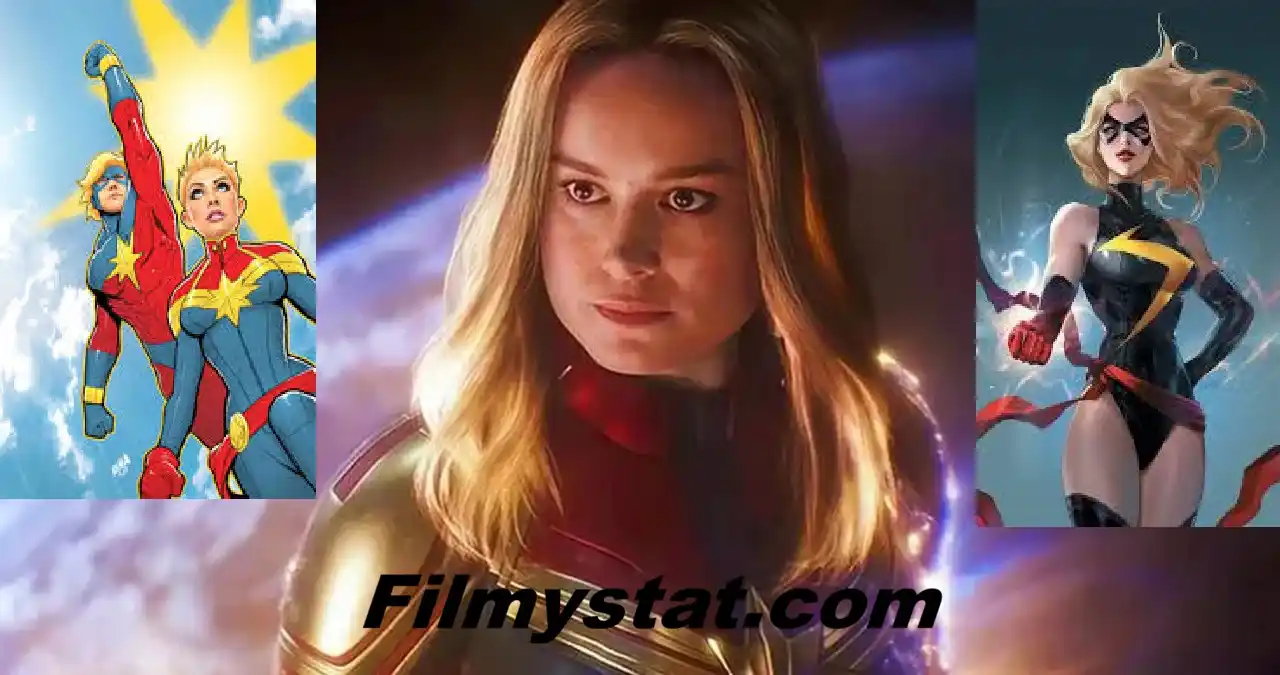
Captain Marvel plays a crucial role in the Marvel Cinematic Universe (MCU) by introducing one of its most powerful heroes while expanding the cosmic side of the franchise. Released in 2019, the film takes a different narrative approach by focusing on identity, memory, and self-discovery rather than traditional hero origin tropes.
Set primarily in the 1990s, Captain Marvel not only explores the past of the MCU but also lays essential groundwork for events that define its future. The film challenges assumptions about power, loyalty, and truth, making it a key transitional chapter in Phase Three.
This article follows a spoiler-free structure first, with a clearly separated spoiler section later.
Captain Marvel
| Detail | Information |
|---|---|
| Release Year | 2019 |
| Genre | Superhero, Action, Science Fiction |
| Director | Anna Boden, Ryan Fleck |
| Studio | Marvel Studios |
| MCU Phase | Phase Three |
| Runtime | Approx. 123 minutes |
Overview:
Captain-Marvel explores the journey of a hero reclaiming her identity while uncovering hidden truths about power, memory, and control in a galaxy divided by war.
Story Overview
The story follows Carol Danvers, a skilled warrior serving an advanced alien civilization. She struggles with fragmented memories and recurring visions from a past she does not fully understand. As interstellar conflict intensifies, Carol’s mission leads her to Earth—specifically to the 1990s—where answers about her origins begin to surface.
Unlike many MCU films, Captain Marvel does not move in a straight chronological line. Instead, the narrative unfolds gradually, allowing the audience to piece together Carol’s history alongside her.
The central conflict is not simply about defeating an enemy, but about questioning who defines truth and how history can be manipulated to control power.
Carol Danvers: A Hero Defined by Self-Discovery
Carol Danvers is portrayed as resilient, confident, and emotionally guarded. From the beginning, she is encouraged to suppress emotion in favor of discipline and control. This conditioning becomes one of the film’s most important narrative elements.
Carol’s journey is defined by:
- Reclaiming suppressed memories
- Challenging authority figures
- Learning to trust her instincts
Rather than learning how to gain power, Carol’s arc focuses on remembering that she already had it.
The Role of Memory and Identity
Memory plays a central role in Captain-Marvel. The film explores how selective memory and altered narratives can shape identity.
Carol’s struggle is not about physical strength but about:
- Understanding her past
- Recognizing manipulation
- Separating truth from imposed belief
This makes the story less about transformation and more about recovery of self, setting it apart from traditional origin films.
A Different Kind of MCU Conflict
One of the film’s strengths lies in how it reframes conflict. Rather than presenting a clear good-versus-evil scenario, Captain Marvel introduces moral ambiguity.
The story asks:
- Who controls historical narratives?
- How often are “enemies” defined by those in power?
- What happens when loyalty is built on incomplete truth?
This approach adds political and ethical depth to the film’s cosmic setting.
Supporting Characters and Their Importance
Nick Fury
Set decades before his leadership role in the Avengers, Nick Fury provides grounded perspective and subtle humor. His interactions with Carol highlight the early foundations of Earth’s defense initiatives.
Maria Rambeau
Maria represents emotional grounding and lived experience. Her presence reinforces themes of friendship, trust, and unconditional support.
Talos
Talos challenges assumptions about identity and loyalty, reinforcing the film’s emphasis on perspective and empathy.
Themes That Define Captain Marvel
Power and Control
The film examines how authority figures often limit others by defining what they are allowed to be.
Identity Beyond Labels
Carol’s journey emphasizes that identity cannot be dictated by rank, memory manipulation, or external validation.
Truth and Perspective
Truth in the film is shown as layered and dependent on who controls the narrative.
Independence and Self-Trust
Carol’s growth comes from trusting her own instincts rather than following imposed rules.
Visual Style and Tone
Visually, Captain-Marvel blends cosmic scale with grounded moments on Earth. The 1990s setting adds texture and contrast, while space sequences emphasize the film’s broader scope.
The tone balances action with introspection, ensuring character development remains central despite large-scale battles.
Captain Marvel’s Place in the MCU
Within the MCU timeline, Captain Marvel is essential:
- Introduces a hero of immense power
- Expands the cosmic narrative
- Provides context for the Avengers Initiative
- Plays a direct role in the events leading to Endgame
The film bridges past and future, reinforcing the interconnected nature of the MCU.
Spoiler Section: Ending Explained
The final act reveals the full truth behind Carol’s past and the manipulation she endured. By reclaiming her memories, Carol also reclaims autonomy over her identity and power.
The ending emphasizes that Carol’s greatest strength is not raw power, but self-realization and freedom from control.
Her choice to act independently reinforces the film’s core message:
True power comes from understanding who you are, not from approval or restraint.
Audience and Critical Reception
Upon release, Captain-Marvel generated widespread discussion.
- Audiences praised its confident portrayal of a powerful female hero
- Critics highlighted its themes of identity and perspective
- The film achieved significant box-office success
Over time, it has been recognized as a vital narrative bridge within Phase Three.
Frequently Asked Questions
Is Captain Marvel essential to the MCU?
Yes. It introduces a major character and key cosmic elements.
Is the movie family-friendly?
Yes, though it addresses mature themes responsibly.
Should it be watched before Avengers: Endgame?
Absolutely. It directly connects to later events.
Is Captain Marvel one of the strongest Avengers?
Yes. She is among the most powerful characters in the MCU.
Why is the movie set in the 1990s?
To establish historical context and shape the Avengers’ origins.
Final Verdict
Captain Marvel is a confident and thematically rich superhero film that focuses on identity, truth, and self-empowerment. By rejecting traditional origin storytelling, it delivers a narrative centered on recovery rather than discovery.
Its importance to the MCU extends beyond spectacle, making it a foundational chapter in the franchise’s evolution.
Related: >> Phase Three >> Chronological Order >> Hub Page