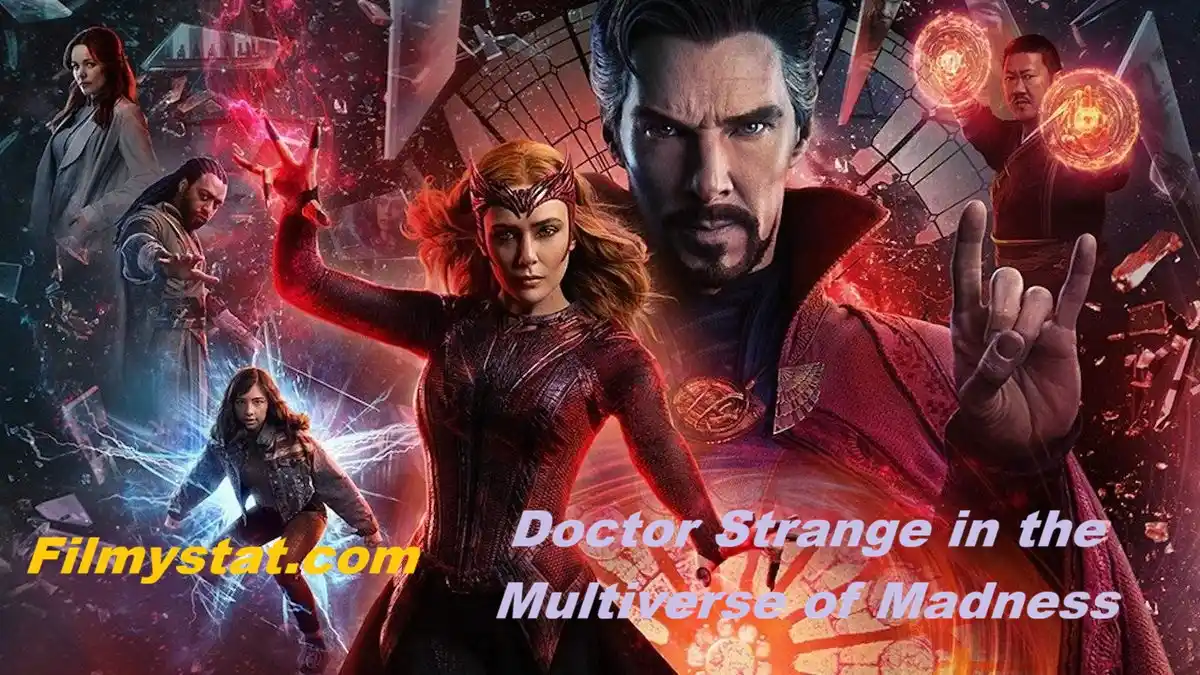
Doctor Strange in the Multiverse of Madness pushes the Marvel Cinematic Universe into its darkest and most experimental territory yet. Released in 2022, the film expands the multiverse concept introduced earlier in Phase Four while blending superhero storytelling with psychological horror, moral ambiguity, and emotional consequence.
Rather than presenting the multiverse as a spectacle-driven concept, Multiverse of Madness treats it as a narrative device to explore grief, obsession, choice, and accountability. The result is a film that challenges both its characters and its audience.
This article follows a spoiler-free structure first, with a clearly separated spoiler section later.
Doctor Strange in the Multiverse of Madness
| Detail | Information |
|---|---|
| Release Year | 2022 |
| Genre | Superhero, Fantasy, Science Fiction |
| Director | Sam Raimi |
| Studio | Marvel Studios |
| MCU Phase | Phase Four |
| Runtime | Approx. 126 minutes |
Overview:
Doctor Strange in the Multiverse of Madness explores the consequences of tampering with reality, pushing the MCU into darker psychological and moral territory.
Story Overview
Doctor Stephen Strange finds himself facing a new type of threat—one that does not originate from a single universe. As cracks in reality widen, Strange encounters forces that challenge his understanding of control, destiny, and responsibility.
The story introduces a young figure whose existence threatens the stability of the multiverse. Protecting her forces Strange to confront the consequences of past decisions made across different realities.
Unlike traditional MCU narratives, the film is driven less by hero-versus-villain dynamics and more by ethical dilemmas and emotional stakes. Every choice carries consequences not just for one world, but for many.
Stephen Strange: Control vs Acceptance
Doctor Strange’s defining flaw has always been his need for control. In Multiverse of Madness, that flaw becomes the film’s emotional anchor.
Strange struggles with:
- Letting others make decisions
- Accepting uncertainty
- Acknowledging the limits of his authority
The multiverse acts as a mirror, showing Strange multiple versions of himself—some heroic, some broken—each shaped by the same desire to control outcomes.
The film challenges Strange to grow not by becoming more powerful, but by learning when not to act.
The Multiverse as a Moral Test
Rather than using the multiverse purely for fan service, the film treats it as a moral testing ground.
The multiverse raises difficult questions:
- Is it ethical to sacrifice one universe to save another?
- Should power be limited, even if it can prevent suffering?
- Are intentions enough to justify catastrophic actions?
By framing the multiverse this way, the film deepens the philosophical scope of the MCU.
A Darker Tone and Genre Shift
Directed by Sam Raimi, Multiverse of Madness incorporates elements of horror rarely seen in MCU films.
The tone includes:
- Psychological tension
- Visual horror influences
- A sense of unease rather than constant humor
This tonal shift reinforces the idea that the multiverse is not a playground, but a dangerous and unstable force.
Supporting Characters and Emotional Weight
America Chavez
America represents potential and vulnerability. Her arc centers on fear, self-belief, and the burden of uncontrolled power. Rather than being defined by strength, her journey is about learning trust.
Wong
As Sorcerer Supreme, Wong embodies responsibility without ego. His presence highlights the contrast between leadership through restraint and leadership through dominance.
Wanda Maximoff
Wanda’s role explores grief taken to its extreme. Her story examines how unresolved loss can distort morality and turn love into obsession.
Themes That Define Multiverse of Madness
Power and Accountability
Having power does not justify its use. The film emphasizes responsibility over capability.
Grief and Obsession
Unprocessed grief becomes destructive when it overrides empathy and reason.
Choice Over Destiny
The film reinforces that identity is shaped by decisions, not fate.
Letting Go
True growth comes from acceptance, not control.
Visual Storytelling and Direction
The film’s visuals are bold and unsettling. Camera movement, distorted imagery, and surreal transitions reflect the instability of the multiverse itself.
Action sequences are designed to feel chaotic and unpredictable, reinforcing the idea that reality itself is fragile.
Doctor Strange in the MCU Timeline
This film is a cornerstone of Phase Four.
It:
- Expands multiverse rules
- Deepens the consequences of reality-altering magic
- Connects directly to earlier Phase Four stories
- Sets up long-term multiversal conflict
Rather than resolving the multiverse arc, it intentionally complicates it.
Spoiler Section: Ending Explained
The ending of Doctor Strange in the Multiverse of Madness resolves the immediate threat but leaves emotional and moral consequences intact.
Rather than winning through dominance, the resolution emphasizes acceptance, accountability, and emotional closure. Characters must face the outcomes of their choices rather than escape them.
The ending reinforces the film’s central message:
Power without restraint leads to destruction, even when driven by love.
This conclusion signals a more mature, consequence-driven direction for the MCU.
Audience and Critical Reception
The film received divided but passionate responses.
- Audiences praised its bold tone and horror elements
- Critics highlighted its thematic ambition
- Some viewers found it darker than traditional MCU films
Over time, it has been recognized as one of the MCU’s most stylistically distinctive entries.
Frequently Asked Questions
Is Doctor Strange in the Multiverse of Madness essential to the MCU?
Yes. It significantly expands the multiverse storyline.
Is the movie darker than other MCU films?
Yes. It includes horror-influenced visuals and themes.
Does it connect to WandaVision?
Yes. It continues Wanda Maximoff’s emotional arc.
Is the film suitable for family viewing?
It is suitable for teens, though darker in tone.
Does it set up future MCU phases?
Yes. It lays groundwork for ongoing multiverse conflicts.
Final Verdict
Doctor Strange in the Multiverse of Madness is a bold, unsettling, and thematically rich MCU film. By embracing darker storytelling and moral complexity, it challenges traditional superhero narratives.
Rather than offering comfort or easy resolutions, the film emphasizes responsibility, restraint, and emotional consequence—making it one of Phase Four’s most important and divisive entries.
Related: Phase Four >> Chronological Order >> Hub Page
1 thought on “Doctor Strange in the Multiverse of Madness (2022) – Complete Movie Review, Story Breakdown, Themes, Ending Explained & MCU Importance”