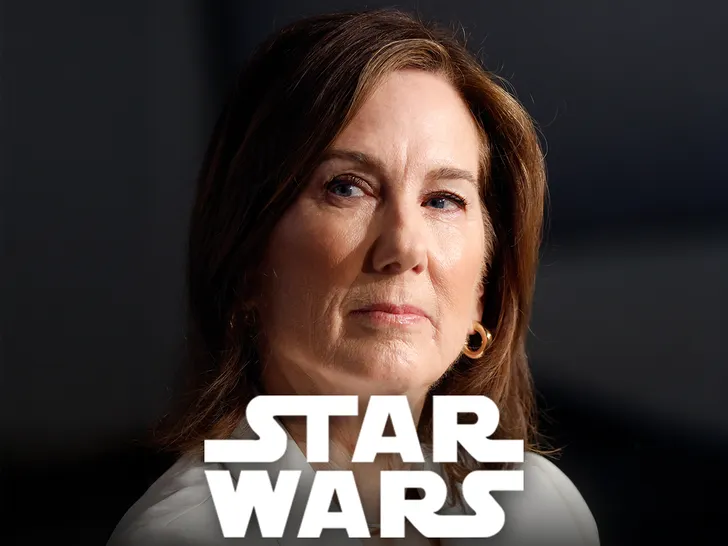
Kathleen Kennedy : After more than a decade at the center of Hollywood’s most debated franchise, Kathleen Kennedy is stepping down as president of Lucasfilm, leaving the Star Wars universe at a transitional moment. The news marks the end of an era that began in 2012, when George Lucas sold his company to The Walt Disney Company and handpicked Kennedy as his successor. For the studio, the decision to move forward under new leadership reflects both the accomplishments and the challenges of the last 13 years.
Disney announced that Dave Filoni will now serve as president and chief creative officer of Lucasfilm. Filoni, who helped shape modern Star Wars television and streaming content, will be joined by Lynwen Brennan, who remains co-president and general manager of Lucasfilm’s broader business operations. Together, they inherit a universe with enormous potential and equally significant expectations.
Kathleen Kennedy : A Decade of Growth, Division and Reinvention
Kennedy’s time atop Lucasfilm produced a level of expansion unmatched in the franchise’s history. The new sequel trilogy, starting with The Force Awakens (2015), re-established Star Wars as a global box office pillar. That film alone grossed more than $2 billion worldwide, proving that Disney’s $4.05 billion purchase of Lucasfilm could pay off in short order.
From a pure numbers standpoint, Kennedy delivered. Over the course of her tenure, the studio amassed more than $5.6 billion at the box office and helped fuel the growth of Disney+. The success of streaming series like The Mandalorian and Andor gave the franchise fresh momentum at a time when theatrical releases grew more uncertain.
Yet commercial success only tells part of the story. Kennedy also presided over one of the most contentious eras in fan history. The new trilogy split the fanbase, particularly after Rian Johnson’s The Last Jedi (2017), which triggered an ongoing argument about tone, legacy characters and creative ownership. The Rise of Skywalker (2019) attempted to course-correct, only to face criticism for playing too safe. Longtime fans grew restless, and online discourse around Star Wars became a saga of its own.
This tension defined Kennedy’s run. She proved that the franchise still mattered to mainstream audiences but struggled to consistently satisfy the most devoted viewers, whose loyalty and frustration made the brand feel both energized and trapped.
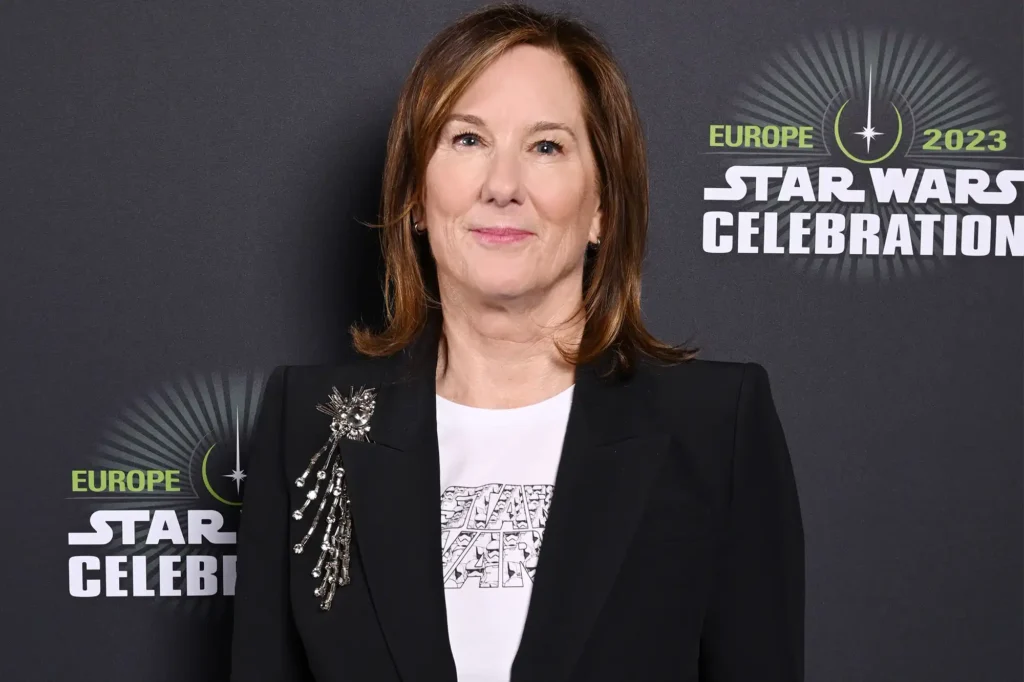
Kathleen Kennedy : The Streaming Era and New Paths Forward
If the theatrical side was shaky, streaming became Kennedy’s strongest legacy. The Mandalorian, created by Jon Favreau and overseen in part by Filoni, provided a tonal reset that appealed to both casual audiences and old-guard fans. It also gave the franchise a new cultural icon in Grogu, a phenomenon that blurred the line between character and mascot.
From there, Lucasfilm experimented with a spectrum of stories:
• Andor, a grounded political thriller
• Ahsoka, an extension of Filoni’s animated universe
• The Book of Boba Fett, a nostalgic companion series
• Skeleton Crew, a youth-driven adventure
Not all projects landed evenly, but the strategy proved that Star Wars could live outside the Skywalker saga and survive without lightsaber-centric mythology. Streaming offered room for nuance, varied pacing, secondary characters and narrative detours that theatrical tentpoles struggle to accommodate.
In that sense, Kennedy helped broaden the definition of what Star Wars could be, even as the films stalled.
Why Lucasfilm Struggled on the Big Screen
The lack of theatrical output became a defining concern during Kennedy’s later years. Since 2019, no Star Wars film reached theatres, despite a constant stream of announcements ranging from Taika Waititi to Patty Jenkins to the now-abandoned Kevin Feige project.
Some of the slowdown had creative causes. Lucasfilm wrestled with tone, genre and generational expectations. How much nostalgia is enough? How much is too much? How radical can experimentation be before it alienates traditional fans? Contention between directors, executives and fans created an environment in which bold ideas had trouble surviving.
There were also operational challenges. The Han Solo spinoff became a high-profile example when directors Phil Lord and Christopher Miller were fired mid-production and replaced by Ron Howard, leading to a film many found competent but uninspired. Meanwhile, an ambitious Ben Solo project developed by Adam Driver and Steven Soderbergh was reportedly shelved, prompting a fan protest in the form of an airplane banner demanding its revival.
The only theatrical entry that bypassed the trilogy discourse successfully was Rogue One (2016), a grounded war film that hit a sweet spot of nostalgia and novelty. Ironically, Rogue One also had a turbulent production, but became the foundation for Andor, one of the most praised Star Wars projects of the modern era.
Dave Filoni: The Right Successor at the Right Time?
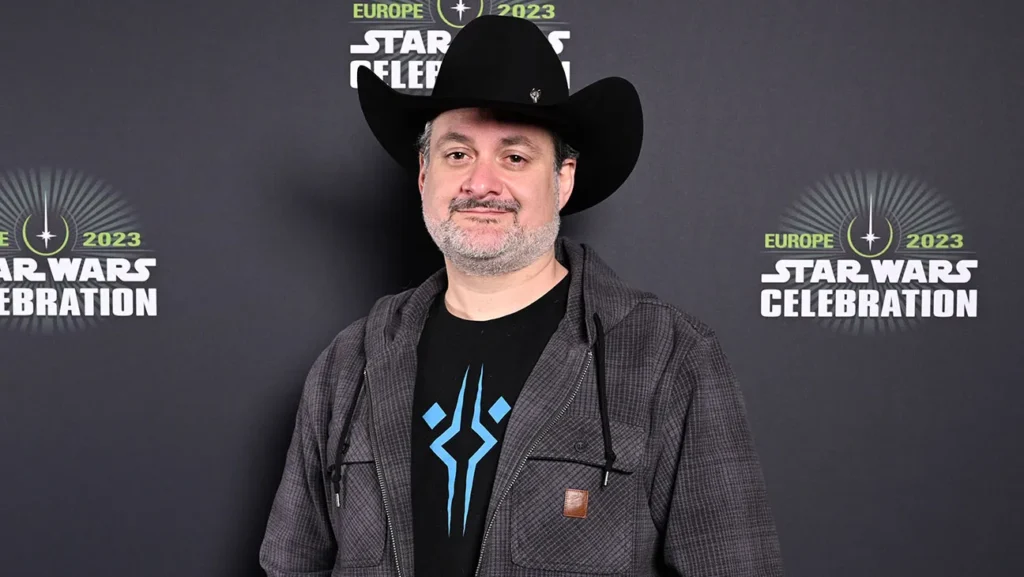
Disney’s choice to elevate Dave Filoni is not surprising. While Kennedy brought institutional clout from decades of producing hits like E.T., Jurassic Park and Indiana Jones, Filoni brings something different: a deep understanding of Star Wars lore and fan culture.
Filoni’s relationship with Lucas goes back to his work on Star Wars: The Clone Wars, and his storytelling sensibility has long favored character arcs, thematic continuity and patience. Fans often see Filoni as an inheritor of Lucas’ philosophy — not because he imitates Lucas, but because he asks similar questions about tone, myth and generational storytelling.
His biggest challenge will not be creativity but scope. Streaming success is one thing; rebuilding theatrical momentum is another. To thrive long-term, Lucasfilm needs to prove it can deliver tentpole films again, not just prestige television.
Kennedy’s Larger Legacy
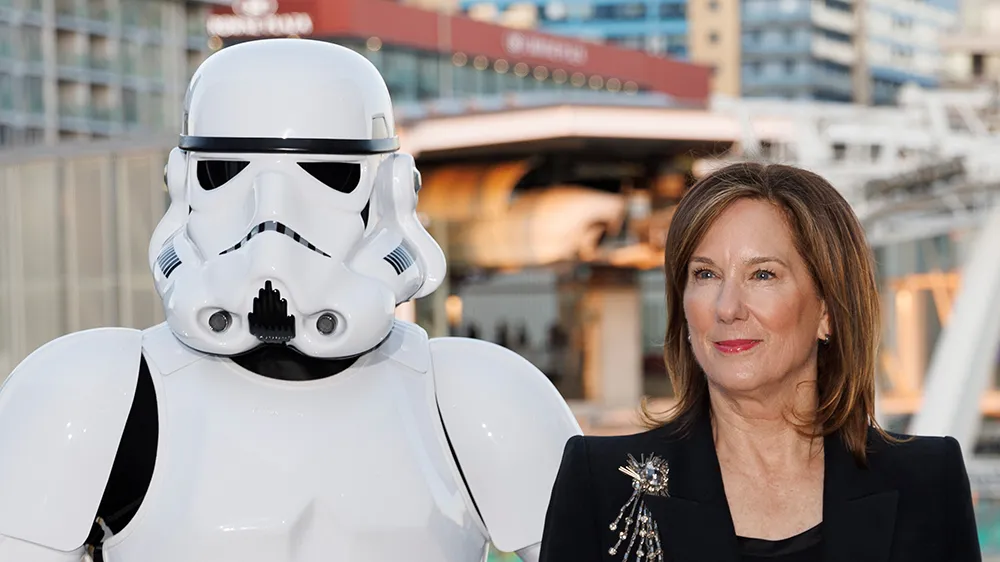
It’s easy to view Kennedy’s tenure only through the lens of Star Wars, but her influence predates and extends beyond the franchise. As a co-founder of Amblin Entertainment, she helped define the blockbuster template of the 1980s and 1990s. Many of the films she shepherded — from Back to the Future to Jurassic Park — shaped how modern audiences think about spectacle itself.
Even as she steps down, Kennedy leaves behind several future Star Wars projects, including Shawn Levy’s Starfighter, starring Ryan Gosling, scheduled for 2027. In that sense, her era is not over so much as it is passing into a new phase.
A Franchise at a Crossroads
The next few years will determine whether Star Wars is a theatrical brand that occasionally streams or a streaming brand that occasionally returns to theaters. The question matters because the franchise has always thrived on cultural events — and events still happen at the box office.
The upcoming The Mandalorian & Grogu film arriving in May will be an early test case. If it connects, Filoni’s leadership may begin with momentum. If it falters, the franchise may lean further toward television, slow-burn storytelling and niche audiences.
Either way, the shift from Kennedy to Filoni signals a strategic move as much as a personnel change. The franchise is returning to a Lucas-rooted creative figure at a moment when confidence, clarity and patience may matter more than spectacle.
Final Word
Kathleen Kennedy’s tenure at Lucasfilm is difficult to summarize in one sentence. She grew the universe, fractured the fanbase, reinvented the brand for streaming, struggled with theatrical direction and delivered some of the most financially successful films of the decade. She also leaves the franchise healthier in terms of infrastructure, talent and storytelling range than when she arrived.
If the next chapter of Star Wars succeeds, it will likely be because the foundation she built proved sturdy enough for a new voice to take the controls.