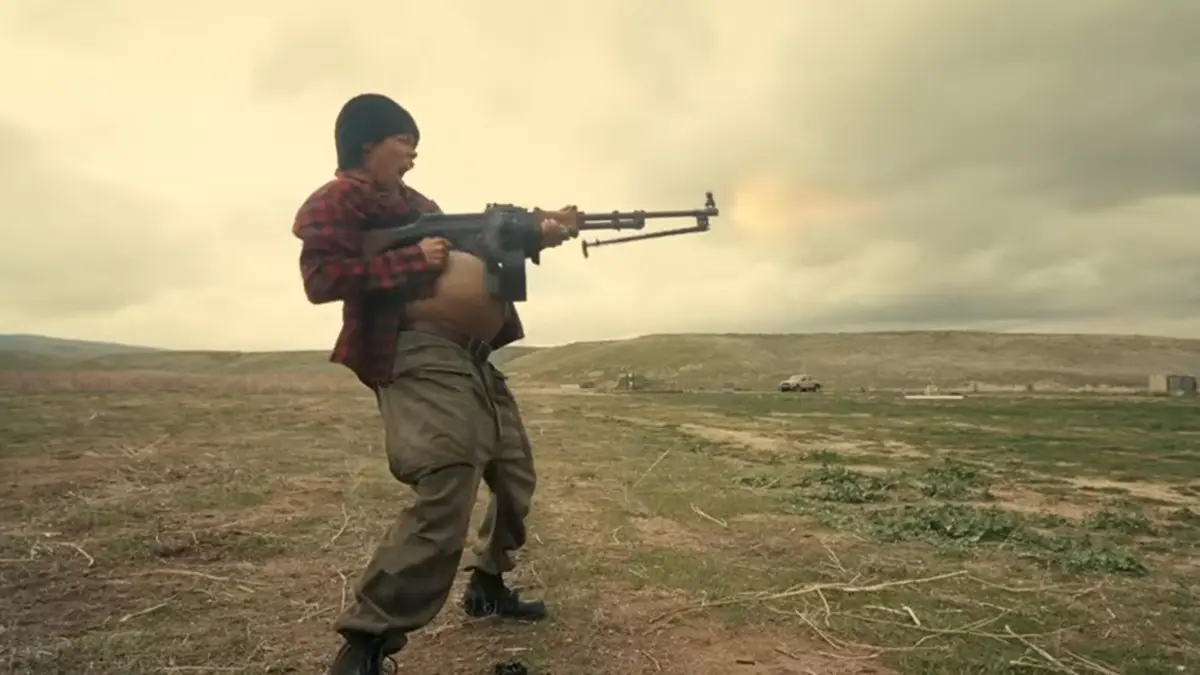
One Battle After Another is one of the most anticipated films of 2026, directed by Paul Thomas Anderson and starring Leonardo DiCaprio in a lead role that is expected to push his acting range even further. The film is described as a mix of political drama, action, and psychological storytelling, and it carries a serious tone from beginning to end, although at times it feels intentionally chaotic which might confuse some viewers.
One Battle After Another – Basic Details
| Category | Details |
|---|---|
| Movie Name | One Battle After Another |
| Release Year | 2025 |
| Genre | Drama, War, Political Thriller |
| Director | Paul Thomas Anderson |
| Lead Cast | Leonardo DiCaprio |
| Language | English |
| Budget | $130–175 million |
| Tone | Intense, layered, psychological |
| Release Type | Theatrical release |
What Is One Battle After Another About
The film is inspired by themes of political conflict, resistance movements, and personal struggle. It does not present war in a traditional heroic way, instead it focuses on how individuals get caught in larger systems of power and violence. The story feels less like a single mission and more like a series of events connected by chaos, which is where the title actually starts to make sense.
The narrative is not always linear, and sometimes it jumps between moments in a way that requires attention, otherwise it can feel slightly disjointed.
Story Overview
The film follows a central character who is involved in a larger political or military conflict. As the story unfolds, he finds himself moving from one crisis to another, never really getting a moment to pause or reflect. Each situation brings new challenges, and over time it becomes clear that the battles are not just physical but also psychological.
Instead of focusing only on external conflict, the film spends a lot of time exploring internal struggles. The character is constantly forced to make decisions that carry consequences, and those decisions start to shape who he becomes by the end of the film.
Performance and Characters
Leonardo DiCaprio delivers a performance that feels intense and controlled at the same time. His character is layered, sometimes confident and sometimes completely uncertain. There are moments where his performance feels raw, almost uncomfortable, but that actually adds to the realism of the story.
Supporting characters are present, but the film is heavily centered around DiCaprio’s role. Some characters are not explored deeply, which might feel like a missed opportunity, but it also keeps the focus on the main narrative.
Direction and Style
Paul Thomas Anderson brings his signature style to the film, focusing on atmosphere and character rather than fast-paced action. The direction feels deliberate, and even when the story becomes chaotic, it seems intentional rather than accidental.
The film uses long takes, minimal dialogue in certain scenes, and strong visual composition. At times, the storytelling feels abstract, which can either be engaging or slightly confusing depending on the viewer.
Themes Explored
One of the main themes of the film is conflict, not just in terms of war but also in terms of personal identity. The character is constantly trying to understand his place in a world that feels unstable.
Another theme is the idea of survival, both physically and mentally. The film shows how continuous exposure to conflict can change a person, sometimes in ways they cannot control.
The film also explores power and control, showing how individuals are often influenced by larger systems that they cannot fully escape.
Pacing and Narrative
The pacing is uneven, and that is something you will notice early. Some parts move quickly, while others slow down to focus on character moments. This structure may feel inconsistent, but it reflects the unpredictability of the world the film is portraying.
The narrative does not always provide clear explanations, which might leave some viewers confused, but it also gives the film a sense of realism.
Visual Experience
Visually, the film is strong without being overly flashy. The cinematography captures both large-scale environments and intimate character moments effectively. There is a rawness to the visuals that fits the tone of the film.
Some scenes are deliberately uncomfortable to watch, not because of extreme violence, but because of the emotional intensity.
What Works
The biggest strength of the film is its lead performance. Leonardo DiCaprio carries the story and gives it emotional depth. The direction is confident, and the film does not try to simplify its themes.
The atmosphere is consistent, and the film feels immersive even when it becomes difficult to follow.
What Doesn’t Work
The narrative structure can feel confusing at times, especially for viewers expecting a straightforward story. Some supporting characters are underdeveloped, which reduces their impact.
The pacing may not work for everyone, particularly those who prefer a more traditional storytelling style.
Overall Review
One Battle After Another is not a typical war or political film. It is more focused on the human experience within conflict rather than the conflict itself. The film challenges the audience to stay engaged and interpret what is happening rather than simply watching events unfold.
It is not always easy to follow, and at times it feels slightly overwhelming, but it also offers a unique perspective that makes it stand out.
Who Should Watch This Film
This film is best suited for viewers who enjoy serious, character-driven stories with complex themes. If you prefer clear narratives and fast-paced action, this might not fully meet your expectations.