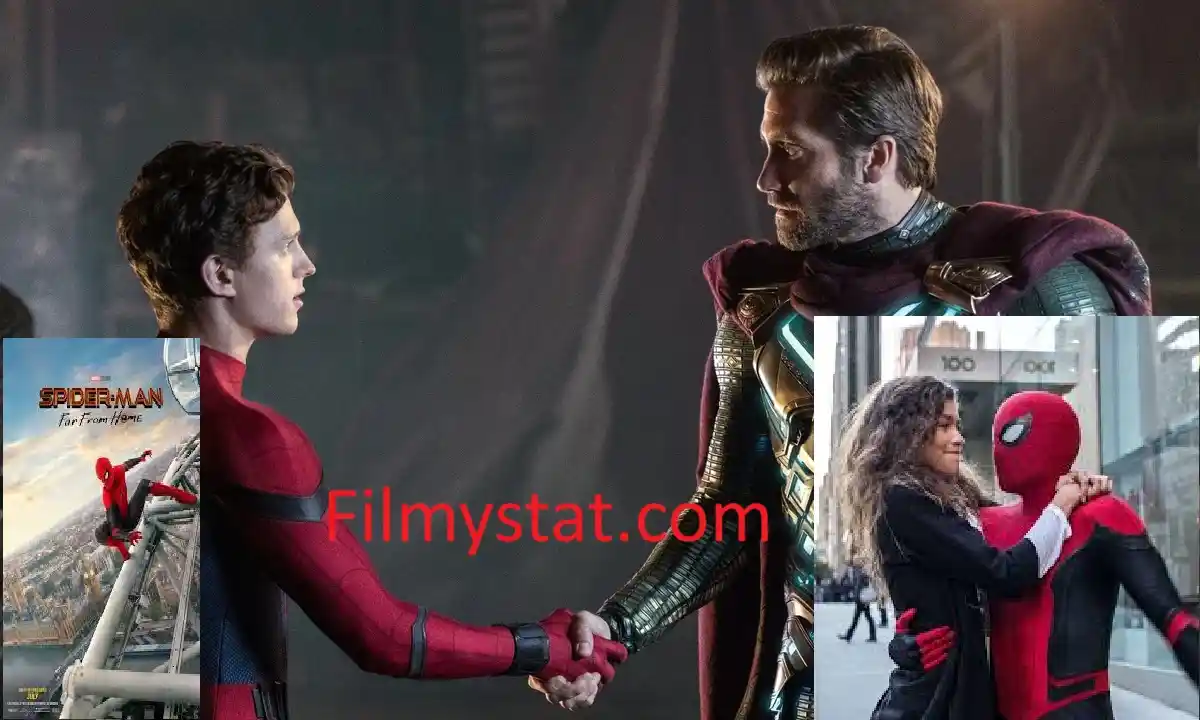
Spider-Man: Far From Home is one of the most important yet often underestimated films in the Marvel Cinematic Universe. Released after the emotional devastation of Avengers: Endgame, this movie had the difficult task of doing two things at once:
- Help audiences breathe again after massive loss
- Set the direction for the MCU’s future
While it presents itself as a light, globe-trotting superhero adventure, Far From Home quietly reshapes Spider-Man’s identity, introduces one of Marvel’s most deceptive villains, and officially closes the Infinity Saga.
This complete guide explores the movie’s story, characters, themes, ending, and long-term MCU importance.
Spider-Man: Far From Home
| Detail | Information |
|---|---|
| Release Year | 2019 |
| Genre | Superhero, Action, Adventure |
| Director | Jon Watts |
| Studio | Marvel Studios |
| MCU Phase | Phase Three |
| Runtime | 129 minutes |
| Language | English |
Story Overview
Peter Parker is exhausted.
After fighting in space, watching his mentor Tony Stark die, and helping save the universe, Peter just wants to be a normal teenager again. He plans a school trip across Europe, hoping to take a break from superhero life and finally confess his feelings to MJ.
But the world doesn’t slow down just because Peter wants it to.
Nick Fury pulls him into a new mission involving mysterious elemental creatures attacking major cities. Alongside a new hero named Quentin Beck, Peter must step up once again — even though he feels unprepared to replace Iron Man.
At its core, Far From Home is about responsibility, grief, and learning what it truly means to be Spider-Man without relying on someone else’s shadow.
Peter Parker – A Hero Struggling with Legacy
Peter Parker’s emotional journey defines this movie.
Life After Tony Stark
Tony Stark was more than a mentor. He was a protector, guide, and symbol of security. Peter feels lost without him, questioning whether he deserves to carry that legacy.
This self-doubt manifests as:
- Avoiding responsibility
- Wanting someone else to lead
- Believing the world needs a new Iron Man, not Spider-Man
Unlike earlier Spider-Man films, this one explores grief, not just growth.
Wanting a Normal Life
Peter’s desire to live normally is not selfish — it’s human. He wants friendships, love, and freedom. The movie respects that wish while showing why it can’t last forever.
His arc concludes not with confidence, but with acceptance:
He doesn’t need to replace Iron Man. He needs to be himself.
Mysterio – One of Marvel’s Smartest Villains
The Illusion of a Hero
Quentin Beck, also known as Mysterio, initially appears heroic, charming, and trustworthy. He presents himself as a savior from another universe, earning Peter’s trust quickly.
This is what makes his betrayal so effective.
A Villain Built on Deception
Mysterio’s power is not strength — it’s perception. Through advanced illusion technology, he creates threats that feel real, terrifying, and unstoppable.
What makes Mysterio dangerous:
- He understands media manipulation
- He exploits Peter’s insecurity
- He turns truth into spectacle
Unlike villains who want destruction, Mysterio wants control of narrative.
Nick Fury and the World Without Avengers
The film subtly shows a world trying to function without its greatest heroes.
Nick Fury represents pressure and expectation. He believes Peter must step up, even if Peter isn’t ready.
This tension highlights an important theme:
The world always needs heroes, but heroes don’t always feel ready to lead.
MJ and Supporting Characters
MJ
MJ is not just a love interest. She is observant, intelligent, and emotionally grounded. Her relationship with Peter is built on honesty rather than idealization.
Ned
Ned represents Peter’s last connection to normal teenage life. His humor adds balance to the film’s heavier emotional undertones.
Happy Hogan
Happy becomes an emotional bridge between Tony Stark and Peter Parker, offering guidance without pressure.
Themes Explored in Far From Home
Legacy and Identity
The movie asks a powerful question:
What happens when a hero inherits responsibility too early?
Peter doesn’t want Tony’s legacy — he wants his own.
Truth vs Illusion
Mysterio proves that perception is more powerful than reality. The film explores how easily truth can be manipulated when people want to believe a story.
Grief and Escapism
Peter’s avoidance of responsibility stems from unresolved grief. Running away feels easier than confronting loss.
Responsibility Without Permission
Unlike previous Spider-Man stories, Peter isn’t waiting to be chosen. He must choose responsibility himself.
Visual Style and Action Design
The film uses illusion-based action creatively:
- Dream-like sequences
- Shifting realities
- Psychological horror elements
The final battle emphasizes instinct and awareness rather than brute force, reinforcing Spider-Man’s intelligence and growth.
Ending Explained
Skip this section if you haven’t watched the movie.
Peter defeats Mysterio by trusting his instincts rather than his eyes. However, victory comes at a cost.
In the post-credit scene:
- Mysterio exposes Spider-Man’s identity
- Peter Parker is framed for destruction
- The world turns against him
This moment completely changes Spider-Man’s future.
For the first time in MCU history:
- Spider-Man has no secret identity
- His personal life is destroyed
- He cannot go back to being a normal teenager
This ending officially launches the next era of Spider-Man storytelling.
Why Far From Home Is Crucial to the MCU
This film:
- Closes Phase Three
- Sets up Phase Four conflicts
- Introduces media manipulation as a threat
- Removes Spider-Man’s safety net
It bridges the emotional aftermath of Endgame with the uncertainty of what comes next.
Box Office and Reception
- Worldwide Gross: $1.13+ billion
- Highest-grossing Spider-Man film at the time
- Strong international performance
Audiences praised its humor, emotional depth, and bold ending.
Why Far From Home Is Better Than It Seems
Many fans underestimate this movie because it feels lighter than Endgame. But its strength lies in emotional realism and long-term consequences.
It proves that:
- Spider-Man stories don’t need massive destruction
- Psychological threats can be more powerful
- Growth comes from responsibility, not confidence
Frequently Asked Questions
Is Spider-Man: Far From Home important for the MCU?
Yes. It officially ends Phase Three and sets up future conflicts.
Is Mysterio a real hero?
No. He is a master of deception and illusion.
Does this movie connect to Endgame?
Yes. It directly deals with the aftermath of Tony Stark’s death.
Does it have post-credit scenes?
Yes. One of the most shocking in MCU history.
Final Verdict
Spider-Man: Far From Home is not just a vacation-themed superhero film. It is a story about grief, responsibility, and stepping out of someone else’s shadow.
It quietly changes Spider-Man forever and prepares the MCU for a world without clear heroes or villains.
For fans who look beyond surface-level spectacle, this film is essential.
Related: >> Phase Three >> Chronological Order >> Hub Page