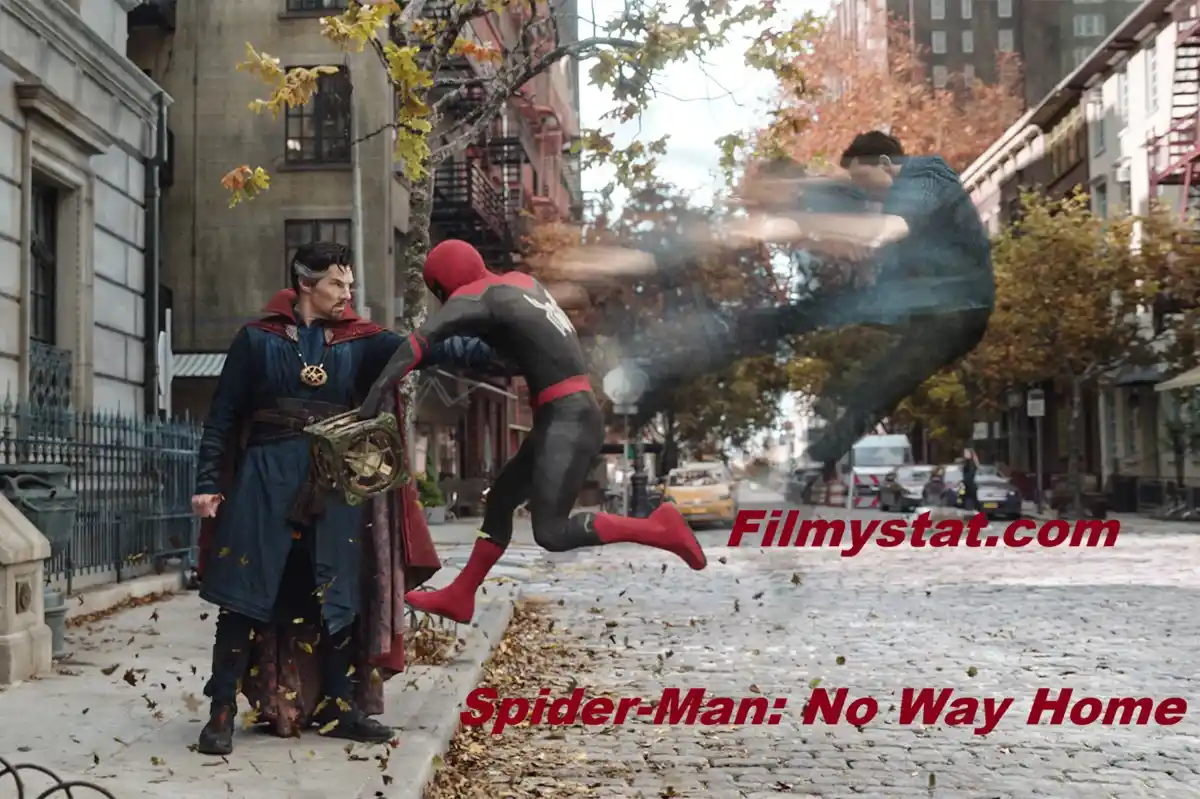
Spider-Man: No Way Home is one of the most emotionally impactful and culturally significant films in the Marvel Cinematic Universe. Released in 2021, the movie brings together nostalgia, consequence, and character growth to deliver a story that goes far beyond spectacle.
While widely known for its multiverse elements, No Way Home is ultimately a deeply personal story about responsibility, sacrifice, and maturity. It completes Peter Parker’s journey from an eager teenager seeking approval to a hero who understands the true cost of doing the right thing.
This article follows a spoiler-free structure first, with a clearly separated spoiler section later.
Spider-Man: No Way Home
| Detail | Information |
|---|---|
| Release Year | 2021 |
| Genre | Superhero, Action, Science Fiction |
| Director | Jon Watts |
| Studio | Marvel Studios / Sony Pictures |
| MCU Phase | Phase Four |
| Runtime | Approx. 148 minutes |
Overview:
Spider-Man: No Way Home explores identity, accountability, and sacrifice while redefining Spider-Man’s place within the Marvel Cinematic Universe.
Story Overview
After the world learns Peter Parker’s secret identity, his life spirals out of control. Public scrutiny affects his personal relationships, education, and future, turning everyday life into a constant battle.
Desperate to restore normalcy, Peter seeks help that unintentionally disrupts reality itself. What follows is not a simple superhero conflict, but a chain of consequences driven by emotional decision-making rather than malice.
Unlike earlier Spider-Man films, No Way Home places its focus on choices and consequences, asking whether good intentions are enough when actions carry irreversible outcomes.
Peter Parker’s Emotional Journey
Peter Parker’s arc in No Way Home is defined by growth through loss rather than triumph.
At the start, Peter:
- Relies heavily on others to solve problems
- Seeks shortcuts to avoid responsibility
- Believes good intentions justify risky choices
As events unfold, he is forced to confront the reality that heroism demands sacrifice, maturity, and acceptance of pain.
This transformation is the emotional core of the film.
The Weight of Responsibility
The film reinforces Spider-Man’s most iconic principle: with great power comes great responsibility. However, No Way Home reframes this idea not as a lesson, but as a lived experience.
Responsibility in this film means:
- Accepting irreversible consequences
- Making choices without personal reward
- Letting go of comfort for the greater good
Rather than offering easy solutions, the narrative emphasizes accountability and emotional resilience.
Multiverse as a Story Device
While the multiverse is a major narrative element, it is used primarily as a character-driven tool, not just a spectacle.
The multiverse:
- Forces Peter to confront alternate outcomes
- Highlights different interpretations of responsibility
- Serves as a mirror to his own choices
This approach ensures the concept enhances character development rather than overwhelming it.
Supporting Characters and Their Impact
MJ
MJ represents emotional grounding and honesty. Her relationship with Peter emphasizes trust, mutual understanding, and the cost of secrecy.
Ned
Ned’s loyalty and humor provide emotional balance, reinforcing the importance of genuine connection in Peter’s life.
Doctor Strange
Doctor Strange represents logic and consequence. His role highlights the difference between intention and outcome, reinforcing the film’s central conflict.
Themes That Define Spider-Man: No Way Home
Identity and Anonymity
The film explores what remains of a person when recognition and identity are stripped away.
Sacrifice Over Reward
True heroism often requires giving up personal happiness.
Choice and Consequence
Every major conflict arises from choices rather than fate.
Growing Into Responsibility
Peter’s journey reflects the transition from adolescence to adulthood.
Visual Storytelling and Tone
No Way Home balances large-scale action with intimate character moments. Action scenes are designed to reflect emotional tension rather than pure spectacle.
The tone shifts gradually from lighthearted to introspective, mirroring Peter’s emotional growth and increasing awareness of consequence.
Spider-Man: No Way Home in the MCU
This film plays a pivotal role in Phase Four:
- Redefines Spider-Man’s identity
- Expands multiverse storytelling
- Resets Peter Parker’s narrative trajectory
- Establishes long-term consequences for personal choices
Rather than closing Spider-Man’s story, No Way Home rebuilds it on a more mature foundation.
Spoiler Section: Ending Explained
The ending of Spider-Man: No Way Home is defined by sacrifice rather than victory. Peter makes a choice that ensures the safety of others at the cost of his own happiness and recognition.
This decision marks Peter’s full transformation into Spider-Man as a moral ideal rather than a celebrated hero.
The ending reinforces the film’s core message:
Responsibility means choosing what is right, even when no one remembers the sacrifice.
Rather than offering closure, the ending creates emotional depth and narrative reset, allowing the character to move forward with renewed purpose.
Audience and Critical Reception
Upon release, No Way Home received widespread acclaim.
- Audiences praised its emotional storytelling
- Critics highlighted its character focus and thematic maturity
- The film became a cultural phenomenon
Over time, it has been recognized as one of the most emotionally resonant MCU films.
Frequently Asked Questions
Is Spider-Man: No Way Home essential to the MCU?
Yes. It reshapes Spider-Man’s future and expands the multiverse.
Should it be watched after Far From Home?
Yes. It is a direct continuation.
Is the movie family-friendly?
Yes, though it contains intense emotional moments.
Does No Way Home rely only on nostalgia?
No. Nostalgia supports character growth rather than replacing it.
Does the ending reset Spider-Man’s story?
Yes, in a more grounded and mature way.
Final Verdict
Spider-Man: No Way Home is a defining MCU entry that blends emotional storytelling with meaningful consequence. By prioritizing character growth over spectacle, it delivers a powerful narrative about responsibility, sacrifice, and maturity.
It is not just a celebration of Spider-Man’s legacy, but a redefinition of what it means to be the character moving forward.
Related: Phase Four >> Chronological Order >> Hub Page